What is played on the screens and the boards?
Role-playing campaigns, long strategy games and computer sessions shared at a table: this page describes the genres we play, and how each is arranged.
How does a role-playing campaign work?
A campaign begins with a pitch. A game master describes a world, a tone and a first problem, and invites the players to create characters who might plausibly care about it. The first evening, which some tables call a session zero, is spent agreeing what the story should and should not contain, so that everybody knows the table is safe before the first die is rolled.
From then on the campaign meets weekly or fortnightly, and each session closes on an unresolved matter so that the players leave curious rather than finished. The game master keeps a short log, and the players take it in turns to read the previous session's summary aloud before play resumes.
We run several campaigns at once. Investigation, exploration and political intrigue are the most popular, and a gentle comedy about a failing village post office has proved remarkably durable. Each campaign is open to new players only at agreed points, usually between stories, which prevents a story from being interrupted in its most delicate moments.
- Investigation
- Slow mysteries solved by careful players
- Exploration
- Journeys across maps drawn as the table travels
- Intrigue
- Factions, favours and carefully worded promises
- Comedy
- Gentle stories played with serious dice
How is a long campaign kept alive?
Planning for absence
Mandurah is a city of rosters, and a campaign that cannot survive a missing player will not survive a season. Our game masters therefore prepare stories in which any character may step aside for an evening, and in which a returning player is briefed in two minutes and welcomed back without comment.
Keeping the notes
Each campaign keeps a shared notebook that records names, promises and unresolved debts. It is read aloud at the start of every session and corrected by whoever remembers better. A good notebook is the only memory a long story has, and the players guard it accordingly.
Closing a story well
Stories that end are remembered more fondly than stories that merely stop. The game master and the table agree on a final session in advance, give each character a last scene of their own, and then write a short epilogue for the wall map. The wall by the window now holds more than thirty of them.
Passing the screen on
Every few seasons a player who has never led a table is invited to run a short story of their own, with a Guide at their elbow. Many of our best game masters began in this way, and most began by saying that they could not possibly do it.
What may a newcomer ask about the games?
Is a role-playing campaign suitable for a complete beginner?
Yes. Beginners are seated at tables that explain the rules as they go, and the game master adjusts the pace accordingly. Many of our best players began in exactly that way. No preparation is expected, and a character can be created in about fifteen minutes with the help of a Guide.
Do you play strategy games that take a long time?
We do. Some strategy games occupy an entire evening, and a few are continued over several weeks with the pieces left in place under a cloth. Shorter games are always available for those who prefer to finish what they begin.
Are computer games played in the house?
They are. Two screens are reserved for computer strategy and role-playing games played together, and members who wish to play at home may join the guild's regular sessions on the chat server, where a Guide is always on hand.
Are particular games required?
No game is required. Each season the members suggest games, the organiser assembles a rotation, and every game receives a turn. Newcomers' suggestions are considered first, because a newcomer's enthusiasm is the most reliable guide to what a table will enjoy.
May I bring a game of my own?
Please do. Bring it to a Warden before the evening begins, ideally with its rulebook, so that a table and a teacher can be arranged. Owners of a game are traditionally excused from tidying it away, although most do so regardless, and many bring a small bag of spare pieces in case of accidents.
What is played on the screens?
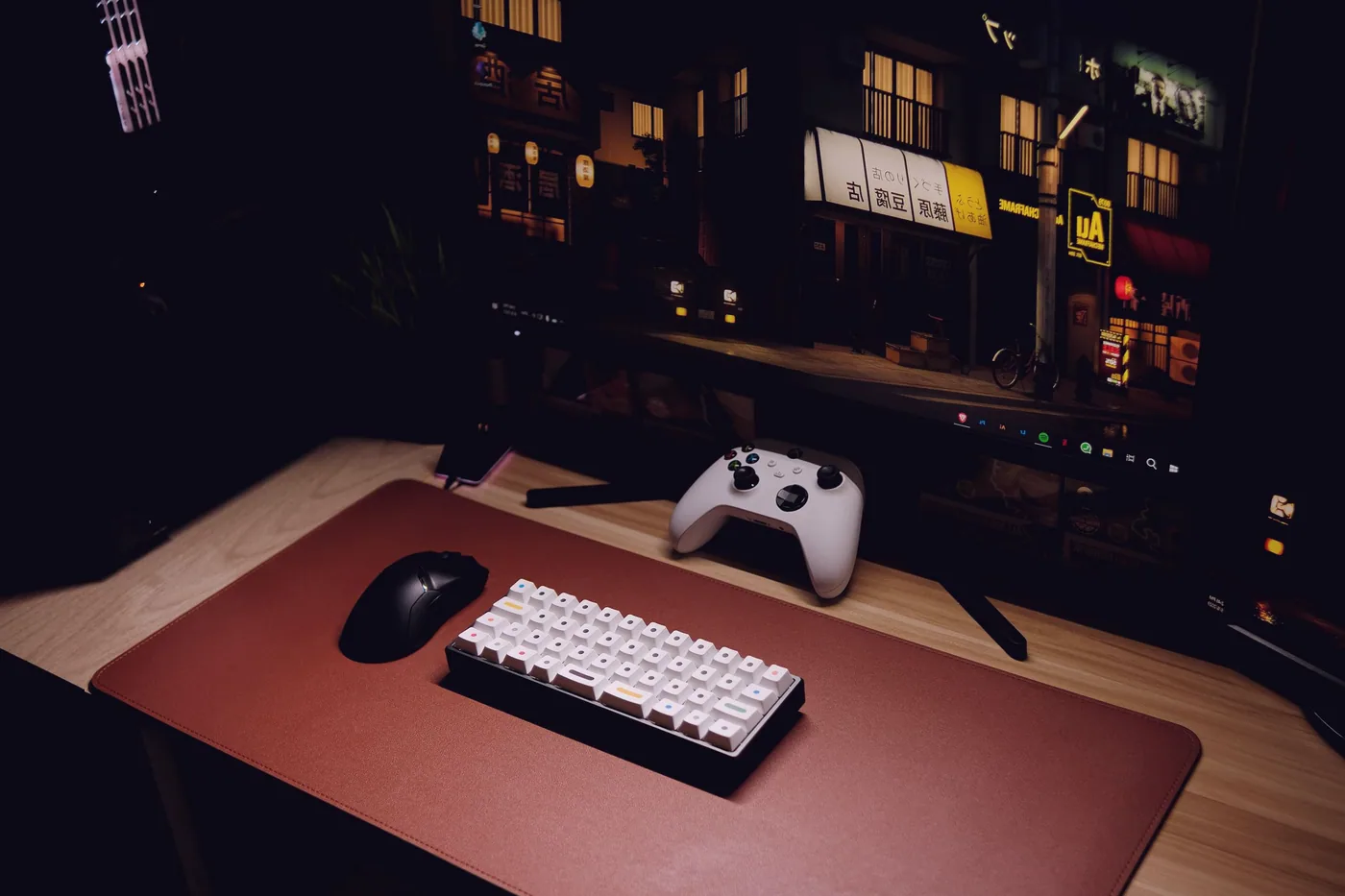
Two screens are kept for computer strategy and role-playing games that suit a small audience: turn-based strategy, base-building, tactical skirmishes and long exploratory adventures where decisions are made by discussion. The player holding the controls is changed regularly, so that no one grows weary or possessive.
When sessions are played across the network, members use servers in our own region, usually the OCE ones, so that nobody is disadvantaged by distance. A chat channel is kept open for these sessions, and a Guide moderates it.
We prefer games that reward conversation, and we avoid the sort of competitive play that depends on speed. A table that is laughing together has usually chosen well, and a table that has gone quiet has usually found something worth the silence.
- Turn-based strategy
- Careful moves discussed by the whole table
- Base-building
- Patient planning from a single settlement
- Shared adventures
- One screen, many opinions, one decision
- Network sessions
- Evening matches on regional servers